
Bronchial asthma
What is bronchial asthma
Bronchial asthma is a disease in which the airways, the passages from the nose and mouth to the lungs, become inflamed due to various causes such as allergies. The airways episodically narrow, leading to repeated coughing, difficulty breathing, and wheezing.
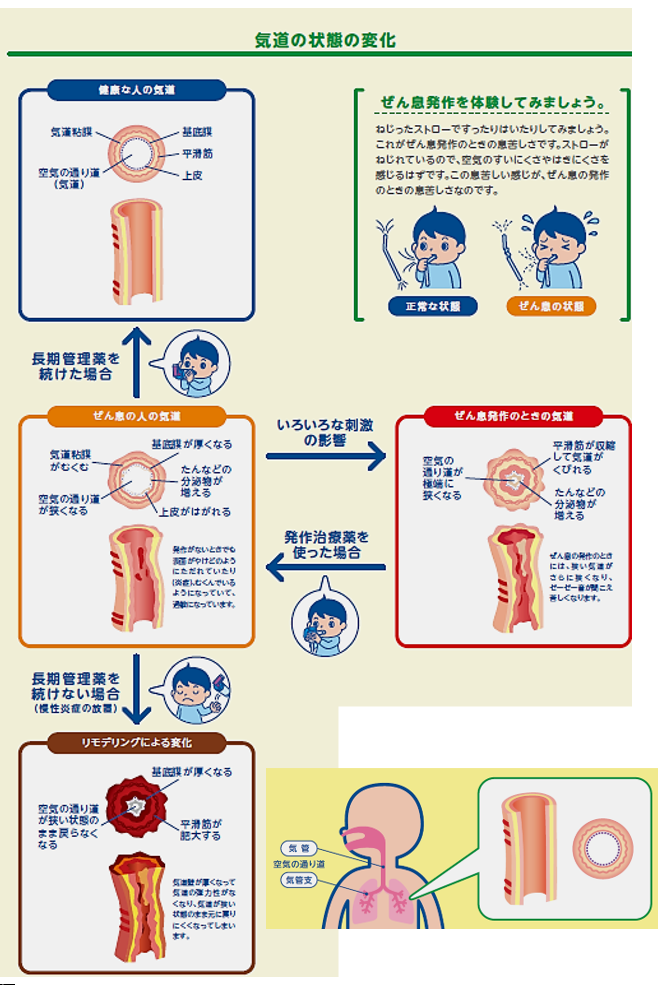
Even when asthma patients are not experiencing symptoms, their airways remain inflamed. If you compare it to the skin, it's like having a scrape that is stinging. The inflamed airways become hypersensitive, and even slight irritants like dust, cigarette smoke, or stress can cause them to constrict and narrow, leading to an acute exacerbation, or an asthma attack.
During acute exacerbations, wheezing sounds ("hoo-hoo" and "zee-zee") can be heard.
This is a sound produced when air is forced through a narrowed airway, much like the sound of a whistle. (See diagram below)External Link: Children's Asthma Handbook(Excerpt from).
Asthma can occur in people of all ages.
It is divided into childhood asthma, which develops in childhood, and adult asthma, which develops in adulthood. There is the "atopic type," which is caused by allergies, and the "non-atopic type," which is caused by non-allergic factors such as infections like the common cold, stress, and other causes.
In children, allergies are involved in most cases, while in adults, non-atopic types are more common.
In cases of atopic dermatitis, where allergies are the cause, allergens such as dust mites, dust, pollen, pet dander, and mold become the substances that trigger allergic reactions. When allergens enter the body of a person who has produced IgE antibodies, they bind to the IgE antibodies, releasing various chemical mediators. This causes contraction of bronchial smooth muscles, swelling of the airway lining, and increased airway secretions, which restricts airflow. This is what is commonly understood as "airways narrowing," leading to persistent coughing and difficulty breathing.
Tests for suspected asthma include blood tests and pulmonary function tests. The goal of treatment after diagnosis is to maintain a state free of acute exacerbations and to enable normal daily life without exercise limitations.
In addition to avoiding triggers such as contact with allergens, respiratory infections, and airborne pollutants like tobacco smoke and air pollution, treatment is carried out using oral and inhaled medications.
Asthma treatment can be easily understood by dividing it into two categories:One is treatment to prevent symptoms from occurring,
Namely, long-term management, and the other is treatment during acute exacerbations, meaning when symptoms suddenly worsen.
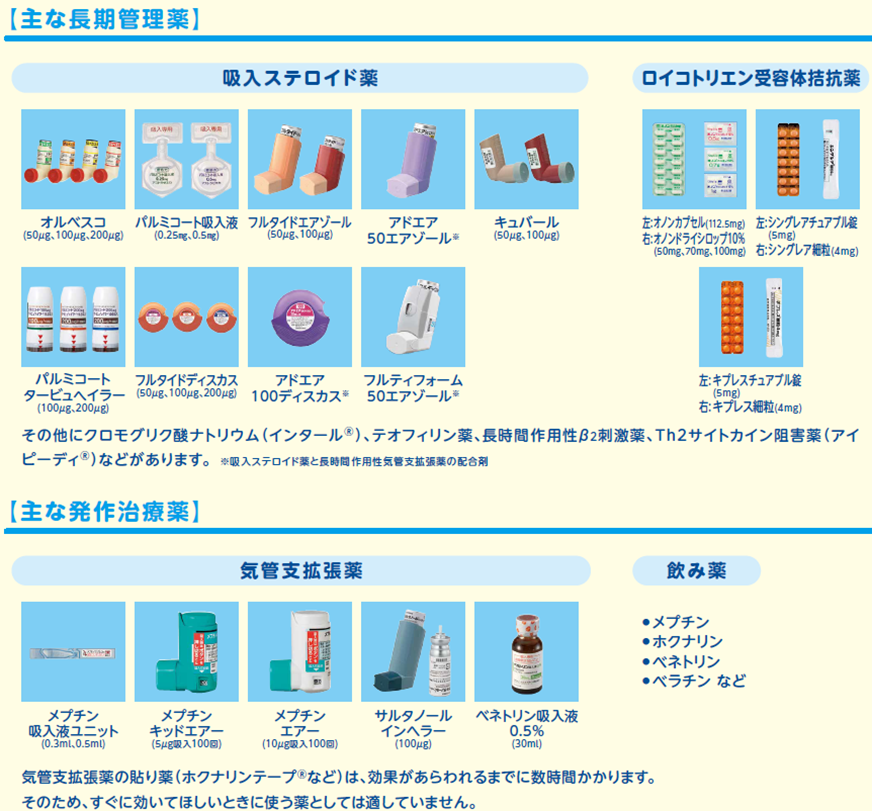
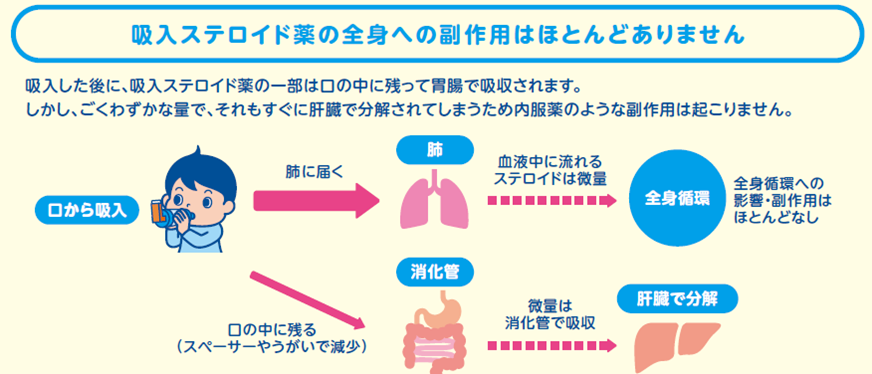
Even if symptoms subside, airway inflammation continues. Please continue treatment to suppress airway inflammation and prevent symptoms from occurring.
Children's Asthma Handbook (External Link)